
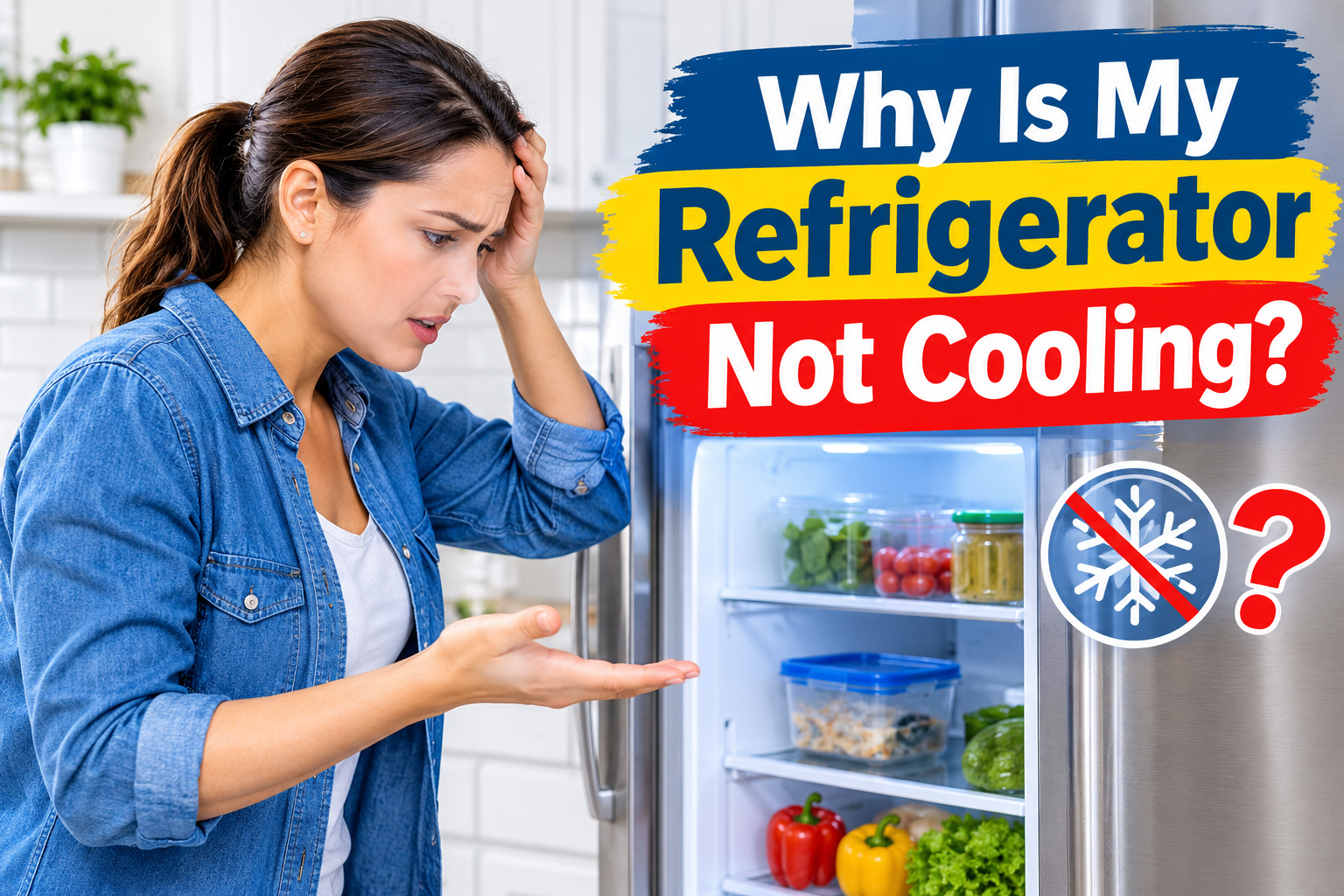
Your refrigerator is one of the most important appliances in your home. It keeps fresh groceries cold, preserves leftovers, protects perishable food, and makes everyday kitchen routines easier. But what happens when you open the refrigerator door and discover that everything inside feels warmer than usual?
Why is my refrigerator not cooling? This is a common problem homeowners experience, and it can happen with almost any refrigerator brand or model. Sometimes, the cause is a simple temperature setting or blocked air vent. In other situations, a failing evaporator fan, dirty condenser coils, defective thermostat, damaged door gasket, or compressor problem may prevent the refrigerator from maintaining the correct temperature.
A refrigerator that runs continuously without getting cold should never be ignored. Delaying attention can lead to spoiled groceries, additional appliance problems, and unnecessary inconvenience.
The good news is that many refrigerator cooling problems can be diagnosed and repaired when the underlying cause is identified correctly.
Our experienced Home Appliance Repair technicians help homeowners address refrigerator cooling problems through professional inspections, advanced diagnostic equipment, and appropriate repair solutions. Whether your refrigerator is completely warm, cooling inconsistently, or running without producing enough cold air, getting the problem checked early can make a difference.
If your refrigerator has stopped cooling properly, contact our repair team at 📞 +1 (866)-310-2780 to discuss the symptoms and ask about available service appointments.
Refrigerator Not Cooling? Here Is What You Should Know
A refrigerator may stop cooling because of blocked air vents, incorrect temperature settings, dirty condenser coils, faulty fans, a malfunctioning defrost system, damaged door seals, or compressor-related problems.
Check the refrigerator temperature setting.
Make sure food is not blocking the internal air vents.
Confirm that the refrigerator doors close completely.
Listen for unusual operating sounds.
Check for visible frost buildup or water leakage.
Arrange professional service if cooling does not return.
Important: Keep perishable food at 40°F or below. If your refrigerator has been above this temperature for an extended period, food safety may be affected. When in doubt, follow official food safety guidance rather than tasting questionable food.
For persistent cooling problems, professional refrigerator diagnostics can identify the cause and help determine the appropriate repair.
Understanding How a Refrigerator Cooling System Works
Before exploring why your refrigerator is not cooling, it helps to understand how the appliance produces cold air.
A refrigerator does not simply generate cold temperatures. Its refrigeration system removes heat from inside the compartments and releases that heat into the surrounding room.
Several components work together to complete this process.
Main components responsible for refrigerator cooling
Compressor: Circulates refrigerant through the cooling system by compressing it.
Condenser coils: Release heat from the refrigerant into the surrounding air.
Condenser fan: Helps move air across the condenser area in models equipped with this fan.
Evaporator coils: Absorb heat from inside the refrigerator and freezer.
Evaporator fan: Circulates cold air through the appropriate compartments.
Thermostat and temperature sensors: Monitor temperatures and help regulate cooling.
Defrost system: Prevents excessive frost from accumulating on the evaporator.
Air damper: Controls cold-air movement between compartments in many refrigerator designs.
Door gasket: Creates a seal that helps prevent warm air from entering.
When one of these components stops working correctly, the refrigerator may struggle to maintain its temperature.
For example, a refrigerator can have a functioning compressor but still fail to cool properly if the evaporator fan is not circulating cold air. Similarly, a refrigerator may run continuously if warm air repeatedly enters through a damaged door seal.
Understanding these differences helps technicians diagnose the actual issue instead of replacing parts unnecessarily.
Common Signs Your Refrigerator Is Not Cooling Properly
A refrigerator does not always stop cooling completely when a problem develops. In many cases, homeowners notice smaller changes before the appliance becomes completely warm.
Recognizing these early warning signs can help you arrange refrigerator repair before the problem becomes more serious.
Refrigerator is running but not getting cold
One of the most frustrating refrigerator problems occurs when the appliance continues running, but the interior temperature does not decrease.
Common symptoms:
The refrigerator motor seems to run constantly.
Drinks and groceries are not as cold as usual.
The refrigerator feels warm even after several hours.
The appliance takes longer than normal to cool newly stored food.
The compressor or fans produce unusual operating sounds.
Possible causes:
Dirty condenser coils.
Defective evaporator fan motor.
Faulty temperature sensor.
Refrigerant system malfunction.
Compressor-related problems.
Professional repair solution:
A technician checks the cooling system, airflow, temperature sensors, and compressor operation. If a defective component is identified, the technician can recommend an appropriate repair.
Freezer is cold but refrigerator is warm
This is another common complaint among homeowners. The freezer may keep food frozen while the refrigerator compartment becomes noticeably warm.
Many refrigerators use a shared cooling system that distributes cold air between compartments.
Common symptoms:
Frozen food remains solid.
Milk, vegetables, and drinks become warmer.
The refrigerator compartment has inconsistent temperatures.
Airflow from refrigerator vents seems weak.
Frost may accumulate around internal cooling components.
Possible causes:
Blocked refrigerator air vents.
Faulty evaporator fan.
Defective air damper.
Frozen evaporator coils.
Malfunctioning defrost system.
Professional repair solution:
A technician examines the evaporator fan, air distribution system, defrost components, and temperature controls. Repairing the affected component may restore proper cold-air circulation.
Refrigerator is not cooling but the freezer works
When the freezer operates normally but the fresh-food section does not cool, the problem may involve airflow rather than the entire refrigeration system.
Common symptoms:
Freezer temperature appears normal.
Refrigerator shelves feel warmer.
Food near the refrigerator vents may be colder than food elsewhere.
Cooling performance changes throughout the day.
Possible causes:
Airflow restrictions.
Damaged damper assembly.
Evaporator fan failure.
Excessive frost buildup.
Temperature sensor problems.
Professional repair solution:
The technician checks how cold air moves between the compartments and identifies any mechanical or electrical problem affecting airflow.
Refrigerator is making unusual noises but not cooling
Some refrigerator operating sounds are normal. However, sudden changes in buzzing, clicking, rattling, or fan noise can indicate a developing problem.
Common symptoms:
Repeated clicking sounds.
Unusual humming.
Rattling from the lower refrigerator area.
Fan noise that changes unexpectedly.
Continuous operation without sufficient cooling.
Possible causes:
Condenser fan motor problems.
Evaporator fan motor failure.
Compressor starting problems.
Loose internal components.
Electrical control issues.
Professional repair solution:
An experienced technician identifies where the noise originates and checks the related mechanical and electrical components.
Do not ignore repeated clicking or unusual electrical smells. These symptoms deserve prompt professional attention.
Refrigerator is leaking water and not cooling
Water leakage combined with poor cooling may indicate more than one appliance problem.
Common symptoms:
Water collecting underneath the refrigerator.
Moisture around the freezer compartment.
Unusual frost buildup.
Temperature fluctuations.
Water dripping near the refrigerator's internal components.
Possible causes:
Blocked defrost drainage.
Damaged water supply connection.
Excessive condensation.
Door seal problems.
Defrost system malfunction.
Professional repair solution:
A technician identifies the source of the water and checks whether the leakage is related to the refrigerator's cooling performance.
If water reaches electrical components, avoid touching the affected area and arrange professional service.
Why Is My Refrigerator Not Cooling? Common Causes Explained
There are several reasons a refrigerator may stop maintaining the correct temperature. Some problems are related to airflow, while others involve electrical controls or the sealed refrigeration system.
Understanding these causes helps homeowners recognize when professional refrigerator repair is needed.
Incorrect refrigerator temperature settings
Sometimes the refrigerator is not cooling because its temperature controls have been changed accidentally.
This can happen after cleaning the appliance, moving groceries, or adjusting the control panel.
Warning signs:
The refrigerator feels warmer than normal.
The displayed temperature does not match the actual temperature.
Cooling performance changes after adjusting the controls.
The freezer and refrigerator settings are inconsistent.
What causes this problem?
The temperature setting determines when the cooling system operates. If the setting is too warm, the refrigerator may not maintain a safe storage temperature.
Repair and solution:
Check the manufacturer's recommended settings. A common starting point is 37°F for the refrigerator and 0°F for the freezer, although the appropriate settings depend on the appliance.
If the temperature setting is correct but the refrigerator remains warm, a technician should inspect the temperature sensors and control system.
Dirty condenser coils
Condenser coils help release heat removed from the refrigerator interior.
When dust, dirt, and pet hair accumulate around accessible condenser coils, heat transfer can become less effective. The refrigerator may then struggle to maintain its normal temperature.
Warning signs:
The refrigerator runs longer than usual.
Cooling performance gradually decreases.
The appliance feels warmer inside.
The compressor operates frequently.
Why does this happen?
Refrigerators release heat through their condenser system. Heavy dirt accumulation can interfere with heat removal and reduce cooling efficiency.
Professional repair solution:
A technician checks the condenser area and determines whether cleaning or additional repairs are needed.
The location and cleaning requirements of condenser coils vary by model. Follow the manufacturer's instructions and avoid removing protective panels or accessing electrical components.
Faulty evaporator fan motor
The evaporator fan moves cold air across the refrigerator and freezer compartments.
When this fan stops working, the appliance may produce some cold air without distributing it properly.
Warning signs:
The freezer may remain colder than the refrigerator.
Airflow from internal vents becomes weak.
Food temperatures become inconsistent.
Unusual fan noises develop.
Why does it happen?
The fan motor may wear out, become obstructed by frost, or experience an electrical problem.
Professional repair solution:
A technician checks the evaporator fan motor, electrical connections, and surrounding cooling components. If the motor is defective, replacing it with a compatible part may restore airflow.
Defective condenser fan motor
Some refrigerators use a condenser fan to move air around the condenser coils and compressor area.
If this fan fails, heat may not be released effectively.
Warning signs:
Cooling performance gradually decreases.
Unusual noises come from the lower rear area.
The refrigerator operates for extended periods.
The compressor area becomes unusually hot.
Why does it happen?
The motor may experience wear, electrical failure, or mechanical obstruction.
Professional repair solution:
The technician inspects the condenser fan assembly and related electrical components. A defective motor may need replacement.
Damaged refrigerator door gasket
The door gasket is the flexible rubber seal around the refrigerator door.
Its job is to keep warm room air outside and maintain the cold environment inside.
Warning signs:
The door does not close properly.
Moisture develops around the door.
Condensation appears inside the refrigerator.
Cooling performance becomes inconsistent.
The compressor runs more frequently.
What causes gasket failure?
Normal wear and tear.
Torn or cracked rubber.
Dirt buildup.
Door misalignment.
Physical damage.
Professional repair solution:
A technician examines the door alignment and sealing surface. If the gasket is damaged beyond cleaning or adjustment, replacement may be recommended.
Faulty temperature control thermostat
The thermostat monitors refrigerator temperature and helps control the cooling cycle in models that use this component.
When it malfunctions, the refrigerator may not receive accurate temperature information.
Warning signs:
Refrigerator temperatures fluctuate.
Cooling starts and stops unexpectedly.
The refrigerator becomes too warm.
The compressor does not operate as expected.
Professional repair solution:
A technician checks the thermostat or electronic temperature sensors, depending on the refrigerator design. Defective components can then be replaced when necessary.
Frozen evaporator coils
Evaporator coils absorb heat from the refrigerator interior. However, excessive frost can cover these coils and restrict airflow.
Most refrigerators have an automatic defrost system that periodically removes accumulated frost.
Warning signs:
Heavy frost buildup inside the freezer.
Weak airflow from refrigerator vents.
Refrigerator compartment becomes warm.
Cooling performance gradually decreases.
The freezer may still appear cold in some areas.
Possible causes:
Defective defrost heater.
Faulty defrost thermostat or sensor.
Malfunctioning defrost control.
Air leakage through a damaged door seal.
Professional repair solution:
A technician inspects the defrost system and determines which component is preventing proper frost removal.
Repeated frost accumulation should not be treated as a simple ice buildup problem. The underlying cause needs to be identified.
Faulty compressor
The compressor is one of the most important components in a refrigerator.
It circulates refrigerant through the sealed cooling system, allowing heat to move from inside the refrigerator to the surrounding environment.
Warning signs:
Refrigerator and freezer compartments are both warm.
The compressor repeatedly clicks.
Cooling performance decreases significantly.
The appliance runs without achieving the correct temperature.
Why does compressor failure happen?
A compressor can develop electrical or mechanical problems due to age, component wear, or other refrigeration system faults.
Professional repair solution:
Compressor diagnosis requires specialized equipment and technical knowledge. A technician evaluates the compressor, starting components, electrical system, and refrigeration circuit before recommending repair.
Refrigerant-related problems
Refrigerant is the substance that circulates through the sealed cooling system and transfers heat.
If a refrigerator develops a refrigerant leak or another sealed-system fault, its cooling performance may decrease significantly.
Warning signs:
Both compartments struggle to cool.
The compressor runs for extended periods.
Cooling becomes progressively weaker.
The refrigerator cannot maintain the recommended temperature.
Professional repair solution:
A qualified refrigeration technician must diagnose sealed-system problems, identify any leak, and perform repairs using appropriate equipment and procedures.
Homeowners should never attempt to open, recharge, or repair a refrigerator's sealed refrigerant system.
Faulty electronic control board
Modern refrigerators use electronic control boards to coordinate cooling functions, fans, sensors, and defrost cycles.
A defective control board may prevent one or more systems from operating correctly.
Warning signs:
Unusual temperature fluctuations.
Unresponsive control panel.
Unexpected operating cycles.
Error codes appearing on the display.
Cooling stops without an obvious explanation.
Professional repair solution:
Technicians inspect the control system, wiring, sensors, and related components before determining whether the board needs repair or replacement.
What to Do When Your Refrigerator Stops Cooling
When your refrigerator suddenly becomes warm, it is important to respond calmly and avoid unnecessary troubleshooting.
Some basic checks can help identify simple issues, but internal electrical and refrigeration repairs should be left to qualified professionals.
Safe checks homeowners can perform
Check the power: Confirm that the refrigerator's display or interior light responds normally.
Review the temperature setting: Make sure the cooling function has not been switched off or placed in a demonstration mode.
Inspect the door: Confirm that nothing is preventing the refrigerator door from closing completely.
Check the air vents: Make sure food containers are not blocking visible airflow openings.
Look for visible frost: Excessive frost may indicate a defrost or airflow problem.
Check the surrounding area: Ensure that the appliance has the ventilation clearance recommended by the manufacturer.
Observe unusual sounds: Note whether the refrigerator is clicking, buzzing, or operating continuously.
Protect your food during refrigerator cooling problems
Food safety should be your first priority when a refrigerator stops cooling.
According to the USDA, a refrigerator should maintain a temperature of 40°F or below.
Important precautions include:
Keep refrigerator and freezer doors closed as much as possible.
Use a refrigerator thermometer to check the actual temperature.
Move perishable groceries to another properly operating refrigerator or suitable cooler when necessary.
Follow USDA food safety guidance for food that has been exposed to unsafe temperatures.
Do not taste food to determine whether it is safe.
The USDA generally advises discarding perishable food that has been above 40°F for more than two hours.
GE Appliances
If the refrigerator is completely warm, arrange professional service promptly rather than waiting for the problem to resolve itself.
Refrigerator Repair Solutions for Common Cooling Problems
Professional refrigerator repair begins with identifying the actual cause of the cooling failure.
Replacing parts without proper testing can waste time and may not solve the original problem. Experienced technicians use diagnostic procedures to determine which component needs attention.
Refrigerator condenser coil cleaning and inspection
When condenser coils become covered with dust or debris, heat cannot escape as effectively.
Professional service may include:
Inspecting accessible condenser coils.
Checking for dirt accumulation.
Evaluating condenser fan operation.
Identifying airflow restrictions.
Checking for related cooling problems.
Regular cleaning, when recommended by the manufacturer, can help maintain efficient refrigerator operation.
Evaporator fan motor replacement
A defective evaporator fan can prevent cold air from reaching the refrigerator compartment.
Repair may involve:
Checking fan motor operation.
Inspecting wiring and electrical connections.
Examining the fan assembly for obstructions.
Checking for frost-related restrictions.
Replacing a defective fan motor when necessary.
Refrigerator thermostat and sensor repair
Temperature sensors provide information that helps the refrigerator regulate its cooling cycle.
When these components fail, the appliance may experience inconsistent temperatures.
Professional repair includes:
Checking temperature sensor performance.
Inspecting the thermostat or control system.
Evaluating electrical connections.
Testing related cooling functions.
Replacing defective components when required.
Defrost system repair
A malfunctioning defrost system can allow excessive frost to accumulate on the evaporator coils.
Professional technicians inspect:
Defrost heater assembly.
Defrost temperature sensor.
Defrost thermostat, where applicable.
Electronic defrost controls.
Associated wiring and connections.
The goal is to identify why frost is accumulating rather than repeatedly removing the visible ice without addressing its cause.
Refrigerator compressor repair
Compressor problems require specialized diagnosis because the compressor works as part of the sealed refrigeration system.
A professional inspection may involve:
Evaluating compressor operation.
Checking electrical starting components.
Inspecting related wiring.
Assessing cooling performance.
Determining whether compressor or sealed-system service is necessary.
Compressor replacement is not always the first or only solution. Other cooling system components must be evaluated before making a recommendation.
Electronic control board diagnosis
Electronic control boards coordinate several refrigerator functions.
When a board becomes defective, the refrigerator may experience unexpected operating behavior.
A technician evaluates the control system, checks associated sensors and wiring, and determines whether repair or replacement is appropriate.
Emergency Refrigerator Repair and Same-Day Appliance Service
A refrigerator that stops cooling can quickly become an urgent household problem.
Unlike many other appliances, refrigerators protect food that may become unsafe when stored at temperatures above recommended levels.
If your refrigerator has stopped cooling completely, arranging professional assistance promptly can help reduce inconvenience and prevent a minor component issue from developing into a larger appliance problem.
When should you request emergency refrigerator repair?
Consider requesting prompt service when:
The refrigerator and freezer are both warm.
The compressor repeatedly clicks without normal cooling.
The refrigerator has stopped operating unexpectedly.
You notice unusual electrical smells.
Water is leaking near electrical components.
The appliance displays persistent cooling-related error codes.
Food is becoming warm despite normal temperature settings.
If you notice smoke, burning smells, or signs of electrical damage, keep away from the appliance and seek appropriate electrical assistance. Do not attempt internal electrical repairs.
Benefits of same-day refrigerator repair
Same-day service may offer several practical benefits when an appointment is available.
Faster response
Early attention can reduce the time your refrigerator remains out of service.
Professional troubleshooting
Experienced technicians use diagnostic procedures to identify the source of the cooling problem.
Reduced food waste
Prompt attention may help homeowners avoid additional food losses, although food safety must always come first.
Convenient scheduling
Same-day appointments may help reduce disruption to your household routine.
Appropriate repair recommendations
Technicians can explain the problem and recommend suitable solutions based on the appliance's condition.
If your refrigerator is no longer cooling properly, call 📞 +1 (866)-310-2780 to describe the issue and ask about emergency or same-day Home Appliance Repair availability.
Refrigerator Maintenance Tips to Prevent Cooling Problems
Regular maintenance can help keep your refrigerator operating properly and reduce the likelihood of certain preventable breakdowns.
Although maintenance cannot prevent every mechanical failure, it helps homeowners identify potential problems before they become more serious.
Keep condenser areas clean
Dust and debris around accessible condenser areas can interfere with heat removal.
Follow the manufacturer's maintenance instructions and arrange professional cleaning if the condenser area is difficult to access.
Maintain the recommended refrigerator temperature
Temperature settings play an important role in food preservation.
Recommended starting settings for many household refrigerators include:
Refrigerator: approximately 37°F.
Freezer: approximately 0°F.
The actual food safety target is 40°F or below for the refrigerator and 0°F or below for the freezer. Use appliance thermometers to monitor actual temperatures.
Ask FSIS+1
Avoid overloading the refrigerator
Overfilling a refrigerator can restrict cold-air circulation.
For better performance:
Leave space around internal air vents.
Avoid tightly packing containers.
Keep larger food items away from airflow openings.
Organize groceries so air can circulate.
Inspect refrigerator door seals
Door gaskets help prevent warm air from entering the refrigerator.
Periodically check for:
Visible cracks.
Torn rubber.
Dirt accumulation.
Loose sections.
Doors that do not close properly.
Clean accessible gasket surfaces according to the manufacturer's recommendations.
Avoid keeping refrigerator doors open
Leaving refrigerator doors open for extended periods allows warm air to enter.
This can increase the workload on the cooling system.
Encourage household members to close refrigerator doors promptly after removing groceries.
Pay attention to unusual sounds
A sudden change in refrigerator operating sounds may indicate a developing mechanical problem.
Do not ignore repeated clicking, grinding, or unusual fan noise.
Professional inspection can determine whether the sound is normal or associated with a defective component.
Schedule professional inspections when problems appear
If the refrigerator repeatedly struggles to maintain temperature, arrange a professional inspection rather than relying on repeated resets.
Early diagnosis can help identify developing problems and reduce unnecessary component replacement.
Benefits of Professional Refrigerator Repair
When a refrigerator stops cooling, it can be tempting to assume that a simple replacement part will solve the problem.
However, refrigerator cooling systems involve several interconnected components. A fault in one area can affect the performance of another.
Professional appliance repair provides a more reliable approach to identifying and addressing these issues.
Accurate problem diagnosis
Experienced technicians examine the refrigerator's cooling performance, airflow, electrical components, and temperature controls.
This helps identify the actual cause instead of relying on assumptions.
Advanced diagnostic equipment
Modern refrigerators may include electronic controls, multiple sensors, variable-speed compressors, and specialized cooling systems.
Professional diagnostic equipment helps technicians evaluate these systems more accurately.
Appropriate replacement parts
Using compatible replacement components helps maintain the refrigerator's intended operation.
Technicians consider the refrigerator's brand, model, and component specifications before recommending replacements.
Reduced risk of additional damage
Incorrect handling of electrical components, fans, and sealed refrigeration systems can cause additional problems.
Professional repair reduces the risk associated with unnecessary or improper repairs.
Improved refrigerator performance
Addressing the underlying fault can help restore consistent cooling and normal appliance operation.
Greater convenience for homeowners
Professional service saves homeowners from spending unnecessary time trying to identify complicated internal faults.
Instead, technicians can explain the issue and provide practical repair recommendations.
Why Choose Our Home Appliance Repair Service?
When your refrigerator stops cooling, choosing an experienced repair service is important.
Our Home Appliance Repair service focuses on accurate diagnostics, appropriate repair solutions, and helpful customer support.
We understand that a refrigerator problem can disrupt everyday household activities, especially when food preservation becomes a concern.
Experienced appliance repair technicians
Our service is focused on diagnosing common refrigerator problems involving:
Cooling system malfunctions.
Compressor-related issues.
Evaporator fan failures.
Condenser fan problems.
Thermostat and temperature sensor faults.
Defrost system malfunctions.
Electronic control board problems.
Refrigerator door seal issues.
Advanced diagnostic methods
Accurate diagnosis is an important part of successful refrigerator repair.
Technicians evaluate relevant appliance components to identify the cause of the malfunction before recommending a solution.
Practical repair recommendations
Not every refrigerator cooling problem requires major component replacement.
Our repair approach emphasizes identifying the defective part and explaining the available repair options.
Emergency repair assistance
A refrigerator that has stopped cooling may require prompt attention.
We help homeowners discuss urgent appliance problems and inquire about available emergency service appointments.
Same-day scheduling options
When technician availability and location permit, same-day appointments may help homeowners address refrigerator problems sooner.
Customer-focused service
Homeowners deserve clear explanations and practical recommendations.
Our service focuses on helping customers understand:
What caused the refrigerator to stop cooling.
Which components require attention.
What repair options are available.
How to reduce the likelihood of recurring problems.
Which maintenance practices may help maintain performance.
Our refrigerator repair services
We assist homeowners with a range of refrigerator-related problems, including:
Refrigerator not cooling.
Refrigerator running but not getting cold.
Freezer working but refrigerator not cooling.
Refrigerator temperature fluctuations.
Refrigerator compressor problems.
Evaporator fan motor repair.
Condenser fan motor repair.
Refrigerator thermostat replacement.
Defrost system repair.
Refrigerator water leakage.
Ice maker and dispenser problems.
General refrigerator maintenance.
If your appliance is experiencing any of these issues, call 📞 +1 (866)-310-2780 to discuss your refrigerator problem and ask about available service appointments.
Refrigerator Repair Service Areas Across the United States
Homeowners searching for professional refrigerator repair often want dependable assistance in their local area.
Our target service-area content includes the following U.S. cities. Actual service coverage and appointment availability should be confirmed before scheduling.
Houston, Texas
Dallas, Texas
Austin, Texas
San Antonio, Texas
Los Angeles, California
Phoenix, Arizona
Atlanta, Georgia
Chicago, Illinois
Whether your refrigerator is running without cooling, experiencing temperature fluctuations, or showing signs of a mechanical problem, contact our team to discuss service availability.
Call 📞 +1 (866)-310-2780 for refrigerator repair inquiries and appointment information.
Frequently Asked Questions About Refrigerators Not Cooling
Why is my refrigerator not cooling but the freezer is working?
When the freezer works but the refrigerator stays warm, the problem often involves restricted airflow. Possible causes include a faulty evaporator fan, blocked air vents, frozen evaporator coils, or a defective air damper. A technician can inspect the airflow and defrost systems to identify the specific cause.
Why is my refrigerator running but not getting cold?
A refrigerator may continue running without cooling properly because of dirty condenser coils, a faulty fan motor, incorrect temperature settings, or a compressor-related problem. Check the temperature setting and visible airflow restrictions first. If the refrigerator remains warm, professional diagnostics can identify the underlying mechanical or electrical fault.
How long should a refrigerator take to get cold after being plugged in?
A newly installed refrigerator may need approximately 24 hours to reach stable operating temperatures, depending on the model, room conditions, and installation requirements. Avoid adding large quantities of groceries before the appliance reaches its recommended temperature. If cooling remains inadequate after the manufacturer's recommended stabilization period, arrange a professional inspection.
What temperature should my refrigerator be set to?
For food safety, the refrigerator should maintain an actual temperature of 40°F or below, while the freezer should remain at 0°F or below. A setting around 37°F for the refrigerator and 0°F for the freezer is a common starting point. Use an appliance thermometer to verify actual temperatures.
Can dirty condenser coils cause a refrigerator not to cool?
Yes. Dirty condenser coils can interfere with heat removal and reduce refrigerator cooling performance. Dust and debris may also contribute to longer operating cycles. Follow your manufacturer's cleaning recommendations and arrange professional cleaning if the coils are difficult to access or the refrigerator continues to struggle with cooling.
Why is my refrigerator making clicking noises and not cooling?
Repeated clicking may indicate a problem with compressor starting components, electrical connections, or the compressor itself. However, clicking sounds do not always mean the compressor has failed. A professional technician can inspect the electrical and cooling systems to identify the actual source of the noise.
Is it worth repairing a refrigerator that is not cooling?
Repair may be worthwhile when the refrigerator has a relatively minor component failure and the rest of the appliance remains in good condition. The decision depends on the refrigerator's age, overall condition, availability of compatible parts, and repair requirements. A technician can inspect the appliance and explain suitable repair options.
When should I call a professional refrigerator repair technician?
Contact a professional when the refrigerator and freezer remain warm, cooling performance repeatedly changes, unusual noises develop, or the appliance displays persistent error codes. Compressor, electrical, fan, and sealed-system problems require appropriate diagnostic equipment and technical experience. Call 📞 +1 (866)-310-2780 to ask about refrigerator repair availability.
Conclusion: Restore Your Refrigerator Cooling With Professional Appliance Repair
A refrigerator that stops cooling is more than a minor kitchen inconvenience. It can affect food safety, household routines, and the overall performance of your appliance.
As explained throughout this guide, common refrigerator cooling problems may involve dirty condenser coils, defective fan motors, damaged door gaskets, incorrect temperature settings, frozen evaporator coils, faulty sensors, compressor problems, or malfunctioning electronic controls.
Identifying the correct cause is the most important step toward an effective repair.
While homeowners can perform a few basic visual checks, internal electrical components, compressor systems, and sealed refrigeration circuits require professional attention.
Our Home Appliance Repair service focuses on accurate troubleshooting, experienced technicians, advanced diagnostics, and practical refrigerator repair solutions.
Whether your refrigerator is running but not cooling, your freezer is working while the refrigerator compartment remains warm, or your appliance has stopped cooling completely, arranging professional service early can help reduce unnecessary disruption.
Do not wait until a refrigerator cooling problem becomes a bigger household concern.
Call 📞 +1 (866)-310-2780 today to discuss your refrigerator's symptoms, ask about emergency or same-day repair availability, and arrange professional Home Appliance Repair service in your area.